Welcome to the Walden Metal Site .
Steel is the skeleton of our modern world. From the skyscrapers that define our skylines to the cars we drive and the appliances in our homes, steel products form the fundamental building blocks of contemporary society. Its unique combination of strength, durability, versatility, and recyclability makes it an indispensable material. The journey from iron ore to a finished steel product is a complex ballet of metallurgy, technology, and engineering, a process that producers like Walden Metal have refined to an art form to serve a global market.
A Spectrum of Forms and Grades
The term “steel products” encompasses a vast array of forms, each tailored for specific applications:
Structural Steel: This includes I-beams, H-piles, channels, and angles, which are the primary components for building frames, bridges, and industrial facilities. Their shapes are engineered to provide maximum strength with minimal weight, defying gravity on a monumental scale.
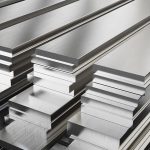
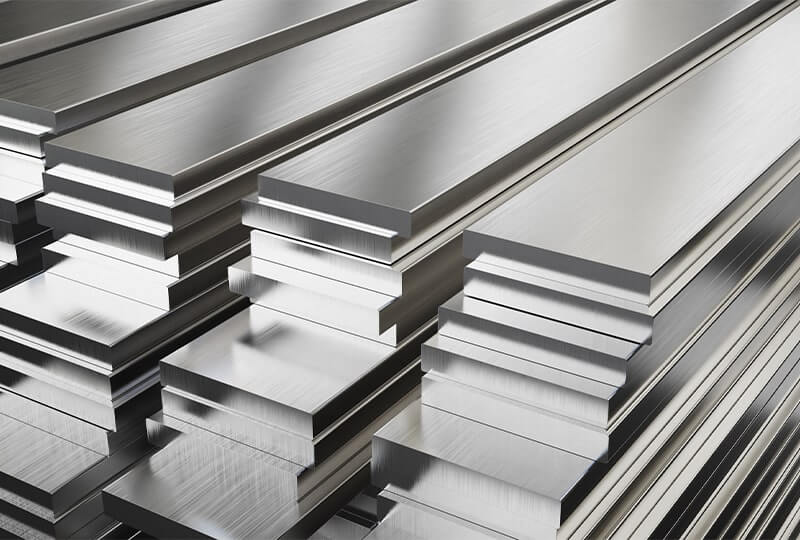
Sheet and Plate: Steel sheet (thin, flat-rolled coils) is the raw material for automotive bodies, household appliances, and storage tanks. Steel plate, being thicker, is used in shipbuilding, heavy machinery, and pressure vessels that must contain immense forces.
Bar and Rod: Steel bars (round, square, flat, or hexagonal) are the starting point for countless manufactured parts. They are forged, machined, or shaped into components for the automotive, aerospace, and construction equipment industries. Wire rod, drawn thinner, becomes wire for nails, fences, and springs.
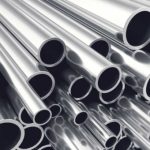
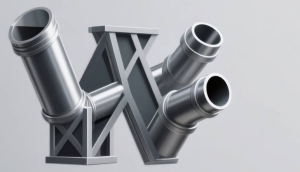
Tubular Products: Beyond standard pipes, this category includes specialized hollow structural sections (HSS) used in modern architectural design and high-performance mechanical tubing for hydraulic cylinders and bearings.
The properties of these products are determined by their chemical composition and processing. Carbon steel, the most common type, sees its strength increase with its carbon content. Alloy steels incorporate elements like chromium, molybdenum, and nickel to enhance characteristics like hardenability, strength, and temperature resistance. Stainless steels, with a minimum of 10.5% chromium, form a passive oxide layer that makes them highly resistant to corrosion.
Pipe Products – The Arteries of Modern Infrastructure
Manufacturing Excellence and Quality Assurance
The production of high-quality steel products is a multi-stage process. It typically begins in a basic oxygen furnace or electric arc furnace, where raw materials are melted and refined into steel of a specific chemistry. This molten steel is continuously cast into semi-finished forms like slabs, blooms, or billets. These forms are then hot-rolled or cold-rolled into their final shapes, processes that align the steel’s grain structure to improve its strength.
For a manufacturer like Walden Metal, quality assurance is interwoven into every step. Sophisticated spectrometry ensures the chemical composition is perfect. Dimensional checks with laser scanners guarantee conformity. Mechanical testing—measuring yield strength, tensile strength, and elongation—validates performance. Advanced heat treatment processes, such as quenching and tempering, are employed to achieve precise mechanical properties, transforming a generic piece of steel into a high-performance product engineered for a specific, demanding purpose.
Sustainability and Innovation
The steel industry is a leader in the circular economy. Steel is 100% recyclable without any loss of quality, and the production of new steel from a producer like Walden Metal often incorporates a high percentage of recycled scrap. Furthermore, the industry is continuously innovating to reduce its carbon footprint through more efficient processes and the exploration of hydrogen-based steelmaking.
The future of steel products lies in developing smarter, stronger, and lighter materials. Advanced High-Strength Steels (AHSS) are enabling the automotive industry to build lighter, safer vehicles. New coating technologies are extending the life of steel in corrosive environments. As global infrastructure continues to expand and evolve, the demand for high-quality, innovative steel products from trusted suppliers will only intensify, ensuring that steel remains the material that shapes our future.