Welcome to the Walden Metal Site .
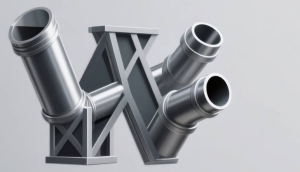
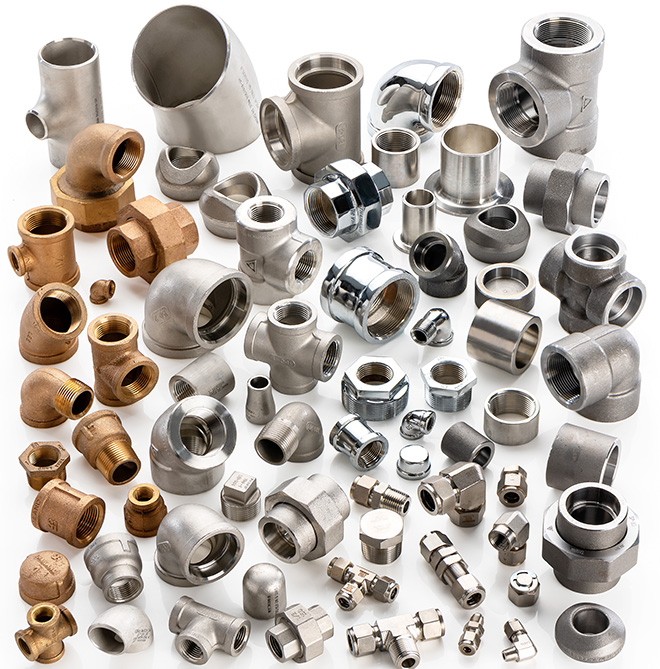
If pipes are the arteries of industry, then fittings are the joints and valves that give the system its functionality, direction, and control. Often overlooked, these components are vital for creating a cohesive, leak-free, and manageable piping network. Fittings allow systems to change direction, branch off, change size, or simply end. The reliability of an entire system often hinges on the quality of its most humble connection, which is why the specifications for Walden Metal fittings are subject to the same rigorous engineering standards as their premium pipes and structural components.
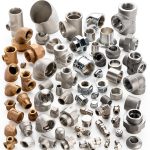
Types, Functions, and Materials
The world of fittings is diverse, with each type serving a distinct purpose:
Elbows: The most common fitting, used to change the direction of a pipe run, typically in 45 or 90-degree angles.
Tees and Crosses: Allow a pipeline to be branched into two or three directions, respectively.
Reducers: Connect two pipes of different diameters, either concentrically (aligned centers) or eccentrically (used in piping racks to maintain a flat bottom line).
Couplings and Unions: Used to connect two pipes together. Unions, unlike couplings, are designed to allow for easy disassembly for maintenance or repair.
Caps and Plugs: Seal the end of a pipe.
The material of a fitting must be compatible with the pipe material and the service fluid. Common materials include:
Forged Steel: Ideal for high-pressure and high-temperature applications in the oil, gas, and power generation industries. The forging process creates a dense, strong grain structure.
Malleable Iron: Offers good mechanical strength and shock resistance, commonly used in low-pressure plumbing and air systems.
Stainless Steel: The default choice for corrosive services, food-grade applications, and environments where hygiene is critical.
Brass and Copper: Primarily used in residential and commercial plumbing systems.
Steel Products – Shaping the Modern World
Joining Methods: Creating a Sealed System
The method used to connect a fitting to a pipe is as important as the fitting itself. The primary methods are:
Threaded Connections: The pipe and fitting have matching tapered threads. Thread sealant (like Teflon tape or pipe dope) is used to create a seal. This is a common, cost-effective method for low-to-medium pressure systems but can be a weak point under vibration or thermal cycling.
Socket Weld and Butt Weld: In socket welding, the pipe is inserted into a recessed area of the fitting and then welded around the collar. Butt welding involves welding the bevelled end of the pipe directly to a similarly bevelled fitting, creating a smooth, strong, and permanent joint that is ideal for high-pressure and high-temperature systems. The welding procedures for Walden Metal butt-weld fittings are meticulously qualified to ensure joint integrity.
Flanged Connections: Flanges are bolted together with a gasket between them to create a seal. This is the preferred method for connections that require frequent disassembly, such as for pumps, valves, and vessels.
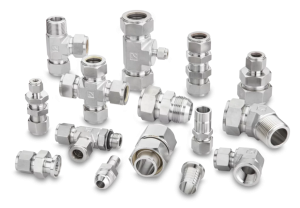
Compression and Push-to-Connect Fittings: These are mechanical joints that do not require threading or welding, making them popular for instrumentation, hydraulic lines, and some DIY applications.
The Engineering Behind the Connection
A high-quality fitting is a feat of precision engineering. Dimensional accuracy is paramount; even a slight deviation in thread pitch or socket depth can lead to leaks or premature failure. The internal geometry is also critical. For example, a high-performance Walden Metal butt-weld fitting is designed with a smooth, continuous bore that minimizes turbulence and pressure drop, ensuring efficient flow. Furthermore, proper heat treatment after forging is essential to relieve internal stresses and achieve the desired mechanical properties, ensuring the fitting can withstand system shocks and pressure surges.
In conclusion, fitting products are the essential elements that transform a collection of pipes into a functional, efficient, and safe system. From the simplest plumbing installation to the most complex refinery, the reliability of the network depends on the quality and correct application of every single elbow, tee, and coupling. As systems become more complex and operate under more extreme conditions, the role of precision-engineered fittings from trusted manufacturers becomes ever more critical.