Address:

China.Guangzhou.JianheCenter.No111-115.Tiyu. WestRoad. Tianhe District

Metal, fitting :The Commercial Buyer’s Playbook for Metal, Pipe and Fitting

Metal, fitting :The Commercial Buyer’s Playbook for Metal, Pipe and Fitting

Lead for merchants: If you trade industrial goods, Metal infrastructure is one of the most durable profit centers—especially in pipe and fitting lines where repeat purchases, standardized specs, and predictable demand create stable cash flow. This guide shows merchants and business owners how to evaluate, source, stock, and sell metal pipes and parts with confidence, using standards-driven data, practical calculations, and proven inventory strategies.

What counts as “metal pipes and parts” in commercial trade?

In B2B supply, “metal pipes and parts” typically includes:

  • Pipes/Tubes: Carbon steel (ASTM A53/A106, API 5L), stainless (ASTM A312 304/316), copper (ASTM B88), ductile iron, and galvanized steel.
  • Fittings: Butt-weld (ASME B16.9), forged/socket-weld and threaded (ASME B16.11), grooved (AWWA C606 style), press fittings (for copper/stainless), and compression fittings.
  • Related parts: Flanges (ASME B16.5), gaskets, bolts/nuts (ASTM A193/A194), pipe supports, caps and plugs, end protectors, and coatings.

These categories share standardized dimensions and markings, enabling straightforward procurement and resale with lower technical risk than bespoke items.
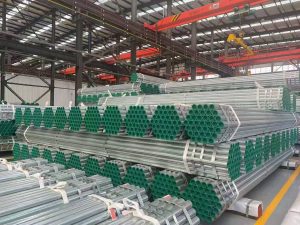
fitting

Materials and grades: where margins meet performance

Carbon steel pipe (workhorse of industry)

Best for water, air, gas, and non-corrosive services in general industry. Common specs include ASTM A53 (structural/pressure), ASTM A106 (seamless, high-temp), and API 5L (line pipe). Typical sellers carry NPS 1/2″–12″, schedules 40 and 80, in 6 or 12 m (or 20/21 ft) lengths. Hot-dip galvanization (ASTM A123) increases corrosion resistance for outdoor and water applications.

Stainless steel pipe

Used for corrosive or hygienic environments. ASTM A312 TP304/316 are common; 316 has better chloride resistance. Expect higher lead times and carrying costs; however, margins can be stronger due to value-added surface finishes, polishing, and traceable documentation.

Copper tube and press systems

ASTM B88 Types K, L, and M are staples in HVAC/plumbing distribution. Merchants often pair tube SKUs with press or solder fitting lines for complete packages and higher basket values.

Sizing, schedule, and quick-reference data

Metal pipe sizing in North America uses NPS (Nominal Pipe Size); outside the US, DN (Diameter Nominal) is used. Schedule numbers (SCH 10, 40, 80) indicate wall thickness. Fittings follow ASME B16.9/B16.11 dimensions so that a 2″ SCH 40 elbow fits a 2″ SCH 40 pipe with the correct wall match.

Quick table: common NPS, wall thickness, and weight (approx.)

NPSScheduleWall thickness (in)Approx. weight (lb/ft)
1″400.1331.68
2″400.1545.02
3″400.21610.25
4″400.23714.98

Note: Weights vary slightly by mill tolerances (ASME/ASTM allow small deviations). Always confirm with mill test reports (MTR).
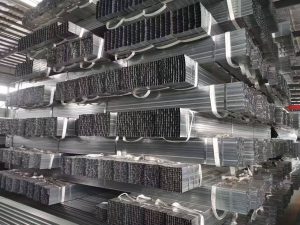
Fitting basics that protect your reputation

  • Butt-weld fittings (ASME B16.9): elbows (long radius = 1.5D), tees, reducers, caps. Stock 90° LR elbows in SCH 40 and 80 first—fastest movers.
  • Forged fittings (ASME B16.11): socket-weld/threaded, Class 2000/3000/6000.
  • Grooved fittings: popular in fire protection and HVAC; pair with grooved couplings/gaskets.

pipe

Quality and compliance checklist (cut risk, win tenders)

  • Standards alignment: ASTM A53/A106/A312, API 5L, ASME B16.9/B16.11/B16.5. Quote the exact revision year in your offers.
  • Documentation: MTR/MTC per EN 10204 3.1, heat numbers on both pipe and fitting. Request PMI (Positive Material Identification) for stainless, hydrostatic test data for pressure pipe.
  • Traceability: Require ISO 9001-certified mills; keep digital copies of certs attached to SKU records.
  • Marking & packaging: Stencil OD/heat/grade on pipes; end caps and rust inhibitor; crate fittings to reduce dents and save on returns.

Inventory strategy for merchants: high-turn SKUs first

Start with a core matrix that covers 70–80% of demand with 20–30% of SKUs:

  • Carbon steel pipe: NPS 1/2″–4″, SCH 40 (black + galvanized), standard lengths.
  • Key fittings: 90° LR elbows, tees, concentric reducers, threaded couplings, unions, and flanges (Class 150).
  • Add-ons: gaskets, bolts/nuts, PTFE tape—small items lift margins and order values.

Example: A 90-SKU starter set (50 pipe SKUs by size/finish, 30 welded fittings, 10 flanges) can cover most light industrial and plumbing distributors. With average turns of 4x/year and a blended gross margin of 18–22%, this set can deliver stable cash flow while you learn local demand patterns.

Costing and pricing: a clear landed-cost model

Use a simple, auditable formula to price quickly and protect margin:

  • FOB price: e.g., carbon steel pipe at $900/MT.
  • Freight + insurance: $120/MT ocean + $10/MT insurance.
  • Duties/tariffs: e.g., 5% of CIF (check HTS 7306.x for welded pipe, 7304.x for seamless; rates vary by country).
  • Port/handling + inland: $45/MT.
  • Finance: 60 days at 8% APR ≈ 1.33% of landed value.

Illustrative calculation (20 MT): CIF ≈ $900 + $130 = $1,030/MT. Duty 5% = $51.5/MT. Handling $45/MT. Finance ≈ $14/MT. Landed ≈ $1,140.5/MT. If you target an 18% gross margin, sell at ≈ $1,390/MT. Always validate current freight and tariff changes before quoting.

Operational math buyers care about

  • Weight-to-length: If 3″ SCH 40 weighs ~10.25 lb/ft, a 21-ft length weighs ~215 lb; a 20-MT (44,092 lb) container holds roughly 205 lengths (variable by dunnage and mix).
  • Lead time reality: Domestic stock: 2–6 weeks. Imported mill runs: 8–12 weeks + 2–4 weeks transit/clearance. Keep a fast-moving core locally and place forward orders on slow sizes.
  • Returns mitigation: Stock standard schedules and classes; special walls/special alloys need PO-specific terms and restocking fees.

Risk management and trust signals (E-E-A-T in practice)

  • Verification: Cross-check MTR heat numbers physically on goods; use handheld XRF for stainless when feasible.
  • Standards fluency: Quote ASME/ASTM/API references on your website and invoices. Buyers recognize competence quickly.
  • Traceable content: Keep certificates, inspection photos, and packing lists archived by PO; share upon request to close deals faster.

Digital merchandising that sells more Metal, pipe, and fitting

  • Product pages: Include NPS/DN, schedule, OD/WT, material grade, standards, and downloadable spec/MTR samples. Add “in-stock/lead time” tags updated weekly.
  • Filters: Size, schedule, material, end type (BE/PE/TBE/TSE), and rating (Class/PN).
  • Quotes in minutes: Offer a quote builder; pre-populate accessories (e.g., flange + gasket + bolts) to increase average order value.

FAQs

What’s the difference between pipe and tube?

Pipe is specified by NPS and schedule for pressure applications; tube is typically specified by OD and wall thickness, often for structural or precision uses. Tolerances and standards differ.

What does “schedule 40” mean?

It’s a standardized wall thickness designation. Higher schedules (e.g., 80) mean thicker walls and higher pressure capability, subject to material and code calculations.

Which standards cover common fittings?

ASME B16.9 for butt-weld fittings, ASME B16.11 for forged socket-weld/threaded fittings, and ASME B16.5 for flanges.

What documents should I request with each shipment?

MTR/MTC (EN 10204 3.1), packing list, country of origin, heat number mapping, and, if applicable, hydrotest and PMI reports.

How do I protect against corrosion in storage?

Use end caps, apply rust inhibitor oil, store indoors or under cover with airflow, and rotate stock (FIFO). Galvanized or epoxy-coated options reduce field issues.

Conclusion and next steps

Merchant success in Metal supply comes from disciplined standards, transparent documentation, and a smart SKU mix. Build a core assortment of pipe and fitting best-sellers, use a clear landed-cost model, and communicate quality evidence on every quote. If you’re ready to expand your catalog or benchmark suppliers, request our starter matrix and pricing template to move from inquiry to PO in hours, not days.


Post a comment

Your email address will not be published.